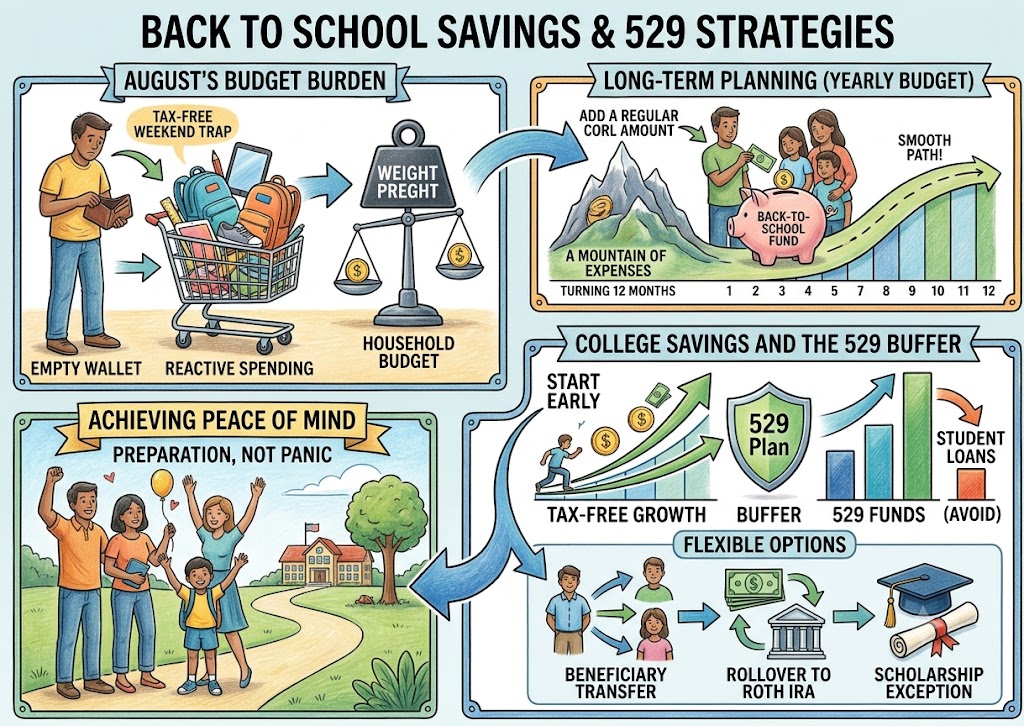
Taking advantage of state tax-free weekends and store sales is a great immediate strategy, but relying solely on discounts won't eliminate the shock to your bank account. The real solution is moving away from reactive spending and adding a dedicated, long-term line item to your annual budget. By treating back-to-school costs as a predictable, recurring annual expense—and setting aside a small amount each month into a targeted savings bucket—you turn a major financial headache into a routine, stress-free transaction.
Planning Ahead: The Power of a 529 Plan
While gear and classroom supplies dominate K-12 preparation, back-to-school season is also a vital reminder to look further down the road toward higher education. College costs continue to rise, making early preparation essential. That is where a 529 College Savings Plan becomes one of the most effective tools in your financial toolkit.
A common misconception is that a 529 plan only makes sense if you can fully fund a four-year degree. In reality, any contribution helps. Think of a 529 as a financial shock absorber. Even if the balance covers only a fraction of tuition, books, or housing, every dollar saved in advance is a dollar your child won't have to borrow at high interest rates later on. Tax-free growth and tax-free withdrawals for qualified educational expenses allow your contributions to work significantly harder than they would in a standard savings account.
What Happens if Funds Are Left Over?
Parents often hesitate to open a 529 because they worry about money being trapped if their child gets a scholarship, chooses a lower-cost path, or decides not to attend college altogether. Fortunately, recent policy changes have made 529 plans far more flexible:
- Beneficiary Transfers: You can easily change the beneficiary to another family member—including siblings, cousins, or even yourself—without tax penalties.
- Roth IRA Rollovers: Thanks to the SECURE 2.0 Act, unused 529 funds (up to a lifetime limit of $35,000, subject to annual contribution limits and account age rules) can be rolled over tax-free directly into a Roth IRA for the beneficiary, giving them a massive head start on retirement savings.
- Scholarship Exceptions: If your child receives a scholarship, you can withdraw an amount equal to the scholarship penalty-free (though earnings will be subject to standard income tax).
Final Thoughts
Educating our children and equipping them for the future is one of our greatest responsibilities and joys as parents. While August brings a heavy load of expenses, it doesn't have to break your family budget. With a proactive yearly spending plan for school supplies and a long-term investment strategy like a 529 plan, you can navigate the school year with confidence and peace of mind.